

Blog
Testosterone for Runners

In the world of endurance sports, we often obsess over VO2 max, lactate thresholds, and carbon-plated shoes. But there is a silent biological engine driving every mile: testosterone. While often pigeonholed as a “bodybuilding” hormone, testosterone is the master regulator of recovery, oxygen transport, and mental grit for the long-distance runner.
Here is why hormonal optimization is the true differentiator in endurance performance.
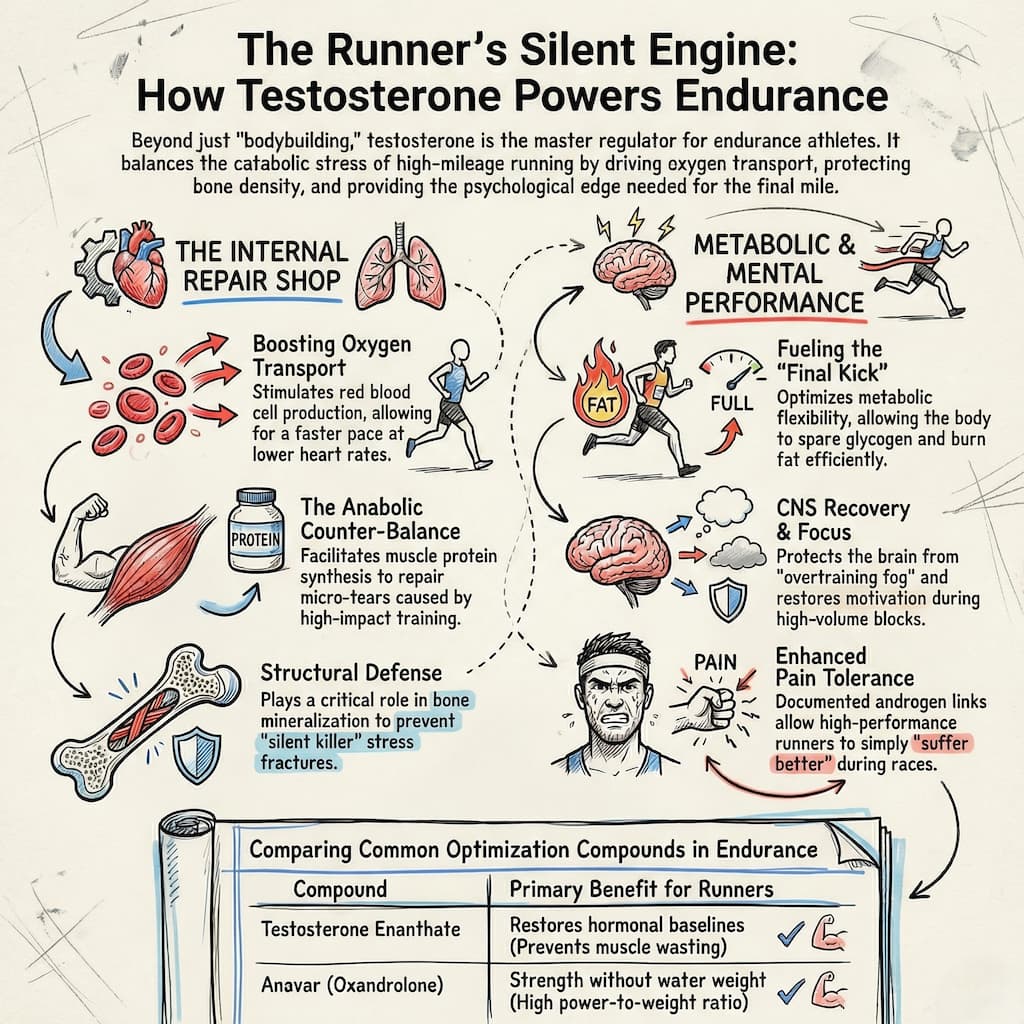
1. Physiological Recovery and Tissue Repair
The primary enemy of the high-mileage runner isn’t the distance; it’s the damage. Long-distance running triggers a massive catabolic state, breaking down muscle tissue and stressing the skeletal system. Testosterone serves as the primary anabolic counter-balance.
- Enhanced Erythropoiesis: Testosterone is a potent stimulator of red blood cell production. For a runner, more red blood cells mean a higher oxygen-carrying capacity. This allows you to maintain a faster pace at a lower heart rate, effectively raising your aerobic ceiling.
- Accelerated Muscle Protein Synthesis (MPS): Every long run creates micro-tears in the quadriceps, calves, and core. Testosterone facilitates the repair of these fibers through MPS, ensuring you bounce back for your next session rather than digging a hole of chronic fatigue.
- Bone Density and Injury Prevention: Stress fractures are the “silent killer” of marathon seasons. Androgens play a critical role in bone mineralization. Maintaining healthy levels is your best internal defense against the structural failures common in high-impact endurance training.
2. Metabolic Efficiency and Performance Metrics
Optimized testosterone levels don’t just help you recover; they change how you burn fuel.
- VO2 Max Optimization: Research consistently shows a correlation between healthy androgen levels and maximal oxygen uptake. By improving the efficiency of the cardiovascular system, testosterone helps you squeeze every bit of performance out of your lungs and heart.
- Glycogen Sparing & Lipid Metabolism: “Hitting the wall” is essentially a metabolic failure, the moment your body runs out of glycogen and struggles to switch to fat. Testosterone helps optimize this metabolic flexibility, allowing the body to preserve glycogen stores and burn lipids more efficiently during the middle miles of a race.
- Mitochondrial Biogenesis: At the cellular level, testosterone influences the density and efficiency of mitochondria. These “powerhouses” are responsible for aerobic energy production; the more efficient they are, the longer you can sustain a sub-maximal effort.
3. Neuropsychological Drive and Mental Fortitude
Endurance is as much a neurological feat as it is a physical one. The brain often gives up long before the legs do.
- CNS Recovery: Chronic high-volume training can lead to Central Nervous System (CNS) fatigue, characterized by “brain fog” and a lack of motivation. Testosterone is neuroprotective, helping the brain recover from the stress of overtraining.
- Aggression and the “Final Kick”: That 26th mile requires a specific psychological shift a competitive aggression to push through the “central governor” that is trying to slow you down. Testosterone provides that psychological edge.
- Pain Tolerance: There is a documented link between androgen levels and pain thresholds. High-performance runners with optimized hormones can simply “suffer better,” enduring the high-intensity discomfort of the final stages of a race more effectively than those with suppressed levels.
4. Understanding Performance Compounds: Enanthate, Anavar, and Beyond
In the quest for optimization, many athletes look beyond natural baselines, especially when high-volume training leads to the “Overtraining Paradox” where excessive cardio actually suppresses natural testosterone production.
- Testosterone Enanthate (Test E): This is the foundational ester often used in Testosterone Replacement Therapy (TRT). For a runner suffering from clinically low levels due to overtraining, “Test E” can restore hormonal baselines, returning the athlete to their “natural” peak performance and preventing the muscle wasting associated with low-T.
- Anavar (Oxandrolone): Within endurance circles, Anavar is frequently discussed due to its unique profile. Unlike many other compounds, it provides significant strength gains and tissue preservation with almost zero water retention. This is crucial for runners who need to stay lean and light while maintaining a high power-to-weight ratio.
- Regulatory Guardrails: It is vital to distinguish between medical optimization and illegal enhancement. For competitive athletes, substances like Enanthate and Anavar are strictly regulated by WADA and USADA. However, understanding their physiological impact is key to understanding the modern landscape of elite endurance performance.
[Read more: Anavar for men and Anavar for women]
5. Summary and Actionable Takeaways
Testosterone is the bridge between the training you do and the results you see. Without it, you are simply breaking your body down without the tools to build it back up. If you are serious about longevity and performance in distance running, your first step shouldn’t be new shoes, it should be a comprehensive blood panel to ensure your hormonal engine is actually running at full capacity.
Medical Disclaimer
Important Notice: This article is provided for informational purposes only and contains general athletic and physiological insights. It is not a substitute for professional medical advice, diagnosis, or treatment.
- Professional Consultation: If you intend to use testosterone or any hormonal supplements during your training, it is mandatory to consult with a specialist physician and undergo necessary clinical testing first. Self-administration can lead to severe health risks.
- Reputable Sourcing: In North America, performance-enhancing products must be sourced with extreme caution. Ensure your provider offers transparent, up-to-date laboratory test results and certifications. For reliable sourcing and verified quality, we recommend utilizing Shop Anabolic Steroids.
- Regulatory Compliance: Athletes should be aware that many of these substances are prohibited by major sporting organizations (such as WADA and USADA) and may result in professional sanctions.
Always prioritize your long-term health and make informed decisions.
Frequently Asked Questions
Does high-mileage running cause low testosterone in men?
Yes, it can. Chronic, high-volume endurance training often leads to an increase in cortisol (the stress hormone), which has an inverse relationship with testosterone. This is often referred to as “exercise-induced hypogonadism.”
Can TRT improve marathon finishing times for amateur athletes?
If an athlete has clinically low testosterone, TRT can significantly improve finishing times by restoring the body’s ability to recover, increasing red blood cell count, and improving mental drive. However, its use is subject to the rules of the specific racing body.
What are the signs of “Overtraining Syndrome” related to hormones?
Common signs include persistent fatigue, loss of morning erections, decreased competitive drive, irritability, and an inability to hit previous performance benchmarks despite increased training.
How do endurance athletes balance heavy lifting with running to boost androgens?
The “Concurrent Training” model suggests that 1-2 sessions of heavy, compound lifts (squats, deadlifts) per week can help stimulate natural testosterone production and improve running economy without adding significant non-functional mass.
What is the relationship between cortisol and testosterone during recovery?
Think of them as a see-saw. When cortisol remains chronically high due to lack of sleep or excessive training, testosterone stays low. Recovery only truly begins when cortisol drops enough for testosterone to begin the anabolic repair process.